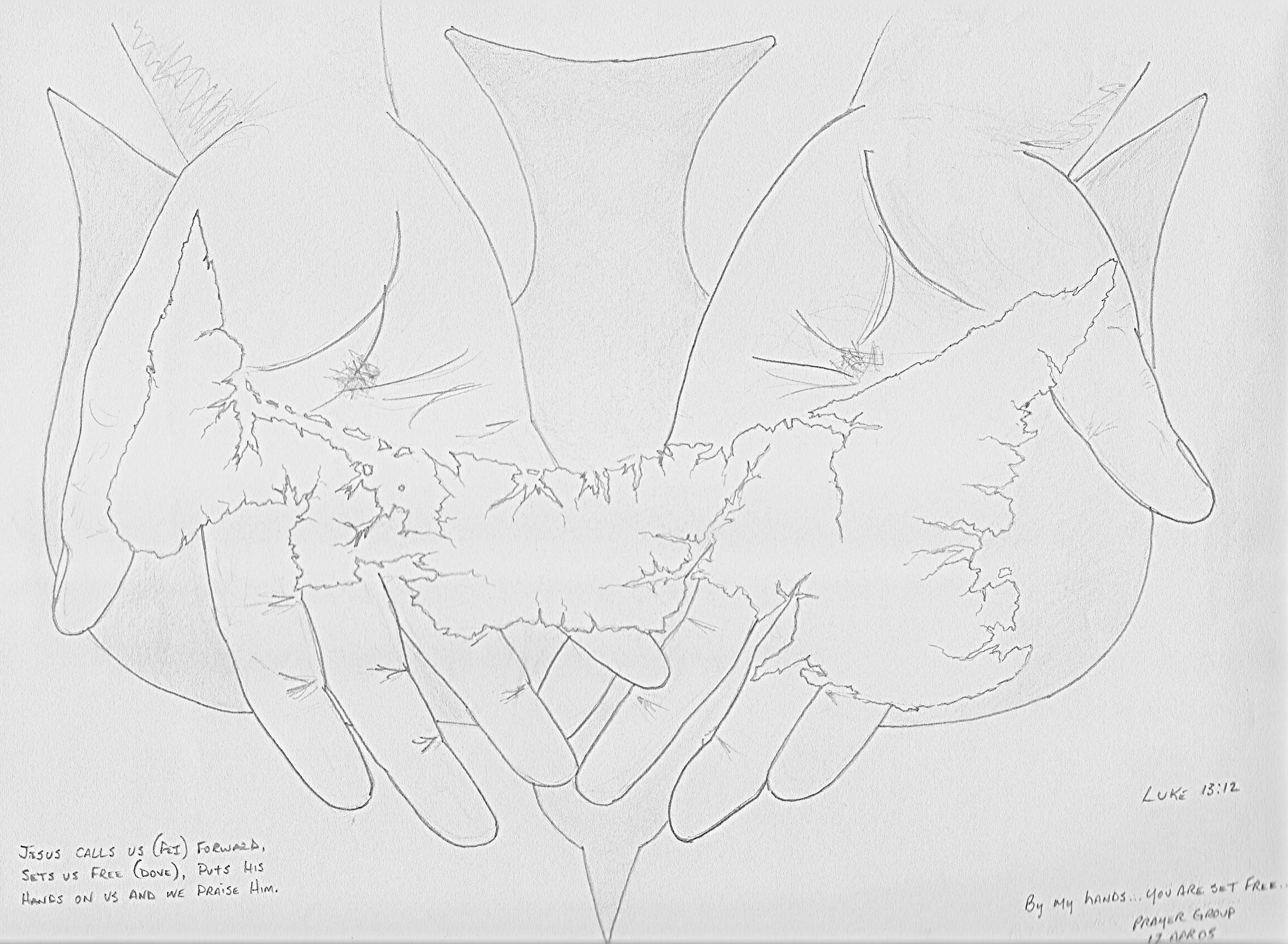
It's possible to become so focused on growing spiritually that Jesus slowly moves out of the centre of our attention. We examine our attitudes, work on our weaknesses, monitor our emotions, and measure how well we're doing. There's always another habit to change or another area that needs attention. Because we genuinely want to become more like Jesus, the effort can seem entirely reasonable.
Somewhere along the way, spiritual growth can become another project we're trying to manage. We become experts at identifying what needs fixing and increasingly frustrated by how slowly things change. The desire to follow Jesus can leave us exhausted when we begin carrying the responsibility for becoming like Him.
That tension sits at the heart of Romans 8, where Paul turns our attention toward the Holy Spirit and the life God has made possible through Jesus.
The Problem with Trying So Hard
"There is now no condemnation for those who are in Christ Jesus"
(Romans 8:1).
Consider where those words appear. Paul has spent several chapters describing humanity's struggle with sin and the limitations of the law. God's law could identify what was wrong and reveal what righteousness required, but it could never produce the new life people needed. Through Jesus, God has accomplished what human effort could never achieve.
Now Paul explains that the Spirit who raised Jesus from the dead lives within those who belong to Him.
The Christian life begins with what God has accomplished and continues through His presence and power. Still, our instinct is often to take responsibility for the results. We want to be patient, so we work harder at controlling our frustration. We want to forgive, so we try to convince ourselves that we're over the hurt. We want peace, so we attempt to manage every thought that makes us anxious.
Jesus described our relationship with Him using the picture of a vine and its branches. In John 15:5, He explains that fruit comes from remaining connected to Him. The life flowing through the vine produces what the branches could never create independently. As we remain connected to Jesus, His Spirit works within us, shaping our desires and teaching us to live in His love.
When Self-Awareness Takes Over
Our desire to grow can gradually turn our attention inward. We become increasingly aware of our weaknesses, emotional responses, and areas where change seems painfully slow.
We might replay a difficult conversation, analysing why we reacted badly or what triggered our frustration. A certain amount of self-examination can help us recognize patterns and take responsibility for our behaviour. Yet constant attention to our struggles can become exhausting, especially when every failure leaves us questioning our progress.
Paul offers an important perspective in Romans 8:5–6. He explains that what governs our minds influences how we live. A mind directed by the Spirit experiences life and peace.
Consider how quickly a single offence can begin influencing an entire day. A remark made in passing becomes something we replay repeatedly. We reconsider the other person's intentions, prepare imaginary responses, and gradually find ourselves interpreting everything through that experience. The original conversation may have lasted only a few seconds, yet it continues occupying our thoughts hours later.
The Spirit helps us recognize these patterns and see them through the truth of Jesus. As our thinking is renewed, we begin responding differently to the people and circumstances around us.
Humility allows us to acknowledge our need for God's help and bring our fears, frustrations, and questions honestly before Him. We learn to depend on His presence and trust Him with the work He is doing within us.
Living as Children Who Are Loved
In Romans 8:14–16, Paul connects being led by the Spirit with belonging to God's family. Through the Spirit, God's children can call Him Abba, Father, an expression of closeness and trust.
Consider how that changes our understanding of obedience.
Children learn about relationships through daily experiences with their parents. They become familiar with their voices, responses, expectations, and expressions of affection. When those relationships are marked by consistent love and care, trust has room to grow. A child gradually learns that they can depend on a parent, even when they don't fully understand every decision.
Paul describes the Holy Spirit as the One who assures God's children that they belong to Him. Our relationship with the Father becomes the foundation from which obedience grows.
That trust influences the decisions we make every day. It may involve recognizing the need to apologize after speaking impatiently or acknowledging that we've been holding onto an offence. It might mean acting honestly when a mistake works in our favour and nobody else is likely to notice.
The Holy Spirit helps us recognize where our choices are pulling us away from the character of Jesus. His conviction is part of the Father's loving care, drawing our attention to the things He wants to address.
Learning to recognize His leading takes practice. We become more attentive to the gentle promptings that encourage kindness, honesty, forgiveness, and trust. As we follow, our relationship with Him continues to grow.
When There Are No Words Left
Following Jesus also means learning to trust Him through suffering, uncertainty, and waiting. Paul describes a creation longing for restoration and people who know God's Spirit while still experiencing the pain of a world awaiting renewal. In the middle of this discussion, he offers a comforting assurance:
"The Spirit helps us in our weakness" (Romans 8:26).
There are seasons when even prayer feels difficult. We may have spent months asking God to intervene, watched circumstances become increasingly complicated, or reached a place where we're simply tired. Words become difficult to find, and answers seem far away.
Paul assures us that the Spirit intercedes for us according to God's will. Even our inability to express what we're carrying is understood by the God who knows our hearts.
Surrender can involve releasing expectations, trusting God with circumstances we cannot control, and remaining faithful through experiences we would never have chosen.
Jesus demonstrated that trust in Gethsemane. Facing the suffering ahead, He brought His anguish before the Father and prayed, "Yet not my will, but yours be done" (Luke 22:42).
Through the Spirit, we learn to trust the Father with our own lives. Paul explains that God's purpose is to form people into the likeness of His Son (Romans 8:29). His work continues through every season, including those we struggle to understand.
We can become so occupied with correcting our behaviour and pursuing a better version of ourselves that we lose sight of the beauty of knowing Jesus. He is the One who gave Himself for us, welcomed us into His family, and sent His Spirit to dwell within us.
As we grow in relationship with Him, His character becomes increasingly evident in our lives. The patience, kindness, forgiveness, and love we long to demonstrate find their source in Him, and the people around us begin to experience something of His goodness.
Maybe it's worth considering how much attention we've given to managing our spiritual progress and how much we've given to knowing Jesus.
The Holy Spirit is already at work, teaching us to trust the Father and helping us become like His Son. Our part is to remain close, listen to His leading, and surrender the places we've been trying to manage on our own.

One Spirit
Join us as Heather shares how Romans 8:1–30 helps us understand what it means to live a surrendered life, guided and strengthened by the Holy Spirit.
We want to be patient, loving, forgiving, and more like Jesus. We genuinely desire to grow in our Christian faith, but how easily do we slip back into trying to change ourselves through our own strength? Paul reminds us that through Jesus, we are free from condemnation and welcomed into God's family as His children. The same Spirit who raised Jesus from the dead now lives within us, giving us the power to live differently.
A surrendered life grows through humility, obedience, and sacrifice. Humility teaches us to depend on God and allow the Spirit to shape our thinking and responses. Obedience grows as we learn to recognize His leading and trust the Father's love, even when we cannot see the whole journey. Through suffering, weakness, and waiting, the Spirit sustains us, helping us pray when words fail and anchoring our hope in God's promises. As we follow Jesus, we can release our need for control, listen to the Holy Spirit's gentle prompting, and trust Him with the next step.
📖 In This Video, We Chat About:
Why spiritual growth requires dependence on the Holy Spirit
The difference between condemnation and the Spirit's loving conviction
How humility, obedience, and sacrifice shape a surrendered life
How the Holy Spirit sustains us through suffering, weakness, and waiting
🙏 Continuing the Journey
Take some time to read Romans 8:1–30 this week. Consider what has been shaping your thoughts, reactions, and decisions. Is there an area where you've been relying on your own strength or holding tightly to control? Bring it honestly before Jesus, ask the Holy Spirit to guide you, and listen for the next step He's asking you to take.
💡 Highlights of the Sermon:
The Spirit transforms us: Humility begins with recognizing our need for God and allowing Him to shape our lives.
The Spirit leads us: As God's beloved children, we learn to trust His voice and respond with obedience.
The Spirit sustains us: Through suffering and uncertainty, the Holy Spirit helps us in our weakness and anchors us in hope.
If you feel called to join in what God is doing here, prayerfully consider supporting our ministry. Your generosity is deeply appreciated! Just click the link below.
#Romans8 #HolySpirit #FollowingJesus